Herbal Tea OEM Blending: Ratio Design, Sensory Panels and Reference Standards
A common misunderstanding about herbal tea is that quality comes down to how good the individual botanicals are. At comparable raw material grades, the difference between products actually comes from the blend: the same three or four flowers and leaves in slightly different proportions produce entirely different colour, aroma and mouthfeel. There is a harder constraint underneath that. Herbal tea is agricultural processing, so the raw material itself varies by origin and season, and without a blend fixed into an executable standard, batch-to-batch variation is close to inevitable. In herbal tea programmes we place blend design and sensory evaluation at the front of the project rather than bolting them on before launch.
1. The three-tier structure of a blend
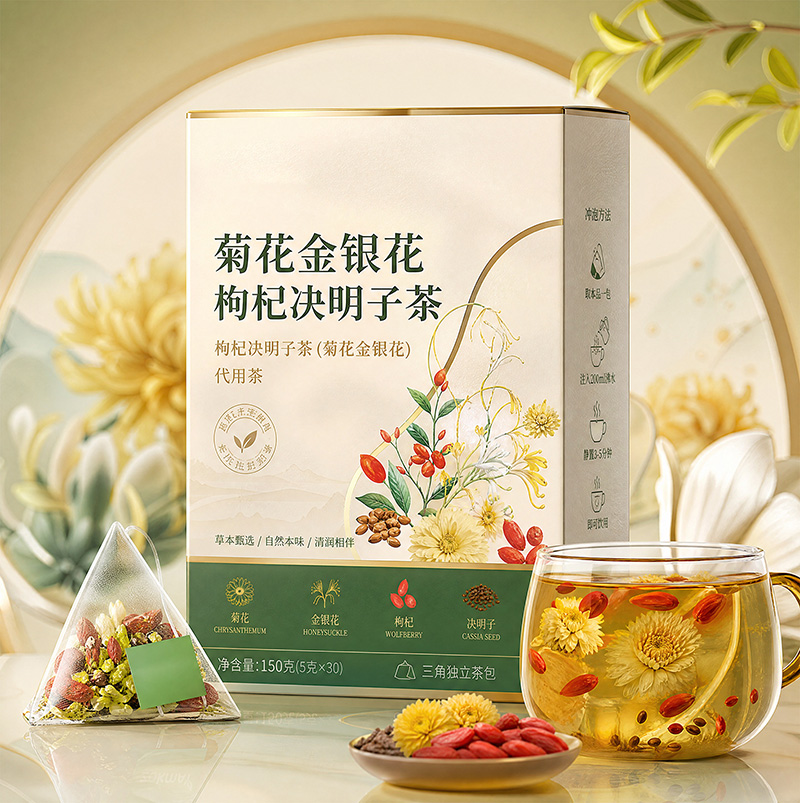
A mature blend has three tiers. The base, typically forty to seventy per cent, defines the principal flavour and the functional positioning - rose, chrysanthemum, cassia seed, hawthorn - and is selected on aroma intensity, infusion durability and cost together. The supporting tier, twenty to forty per cent, adds depth and complementary function; dried citrus peel, poria and liquorice are typical, usually contributing sweetness on the finish or body. The modifying tier stays under ten per cent and tunes the top and tail of the aroma, the depth of colour or the astringency on entry: mint, osmanthus, monk fruit. The value of the structure is that when a base botanical rises in price or runs short there is a rule for adjustment instead of a full reformulation. Design base first, then support, then fine-tune with modifiers - not an even split across everything.
2. Fixing the ratio: from screening to locked formula
Converging on a ratio takes about three rounds. Round one screens direction: three to five coarse ratios following the tier structure, judged on whether the broad direction is right, with no attention to detail. Round two refines in roughly five per cent steps across base and support, producing five to seven samples brewed side by side. Round three confirms reproducibility by making the chosen ratio three times. Every round must be brewed under identical conditions - same water temperature, volume, steeping time and vessel - otherwise too many variables move and the results cannot be compared. Water temperature is the most frequent mistake: the same blend at ninety-five and eighty degrees differs so much in aroma and astringency that it can reverse a decision.

3. Running a sensory panel
Blending cannot be decided by one person. The smallest workable panel is five to seven people. They need no formal training, but they should not smoke, should not have eaten strongly flavoured food that day, and should have normal taste perception. Tasting is blind: random three-digit codes, randomised serving order to avoid positional bias. The scorecard breaks perception into five to seven dimensions - dry appearance, aroma intensity, aroma pleasantness, liquor colour, taste strength, sweetness on the finish, aftertaste - each scored on a five or ten point scale with room for free comments. Two things matter in the summary: the mean, which indicates overall acceptance, and the spread. A dimension with wide disagreement signals polarisation, which is only acceptable if the target consumer sits on the positive side.
4. Reference standards and retained samples
Once a blend is agreed it has to be fixed as a reference standard, because that is the only basis for batch consistency. Two forms exist. The written specification states each botanical with name, origin grade, proportion and permitted substitution range. The physical retained sample is a sealed, light-protected portion of the first approved batch used for comparison. Two cautions apply: retain enough for at least a year of comparisons, and replace it periodically, since the sample itself oxidises and changes colour - typically renewed every twelve months with a side-by-side check at handover. Before releasing a production batch, quality staff brew it under the same conditions against the reference and release only if the difference falls within the agreed tolerance.
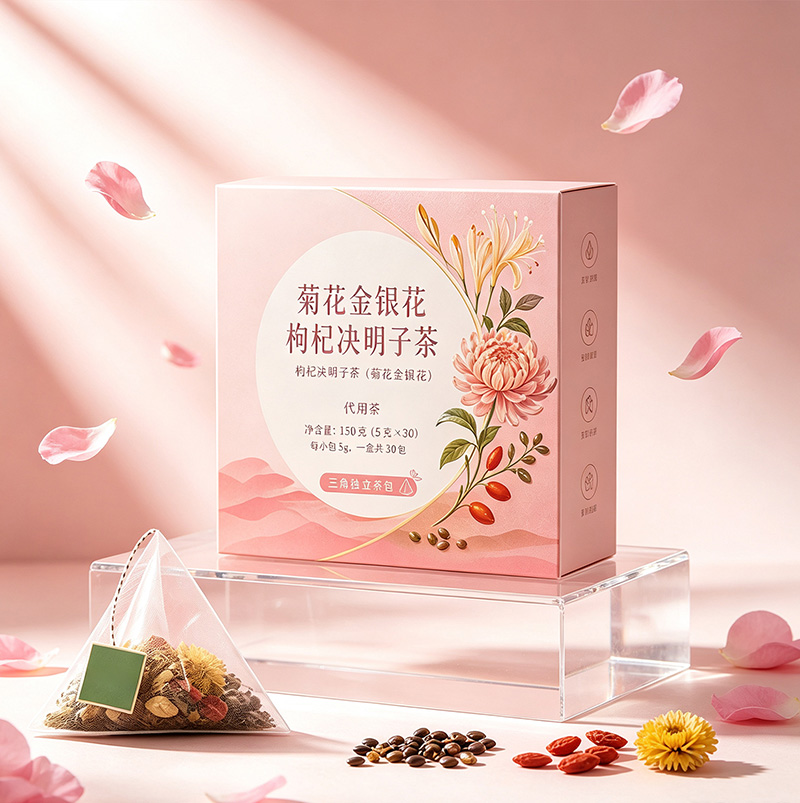
5. How process changes what the blend delivers
The same ratio presents very differently depending on process. Cut size comes first: finer cuts infuse faster and give a deeper liquor, but they produce dust, cloudiness and more astringency, while oversized cuts stay durable but thin and mute on aroma. The usual answer is to cut by material character - flowers left whole or lightly cut, roots and rhizomes sectioned or sliced. Mixing method and time come next: materials with large density differences segregate, so under-mixing leaves bag-to-bag variation while over-mixing shatters fragile flowers. Sterilisation is the third lever, and steam and microwave routes differ measurably in how much floral aroma they cost, so sensory loss belongs in the process selection. All of these parameters should be settled at pilot scale and written down.
6. Scaling up and holding consistency
The move from lab sample to production most often drifts at weighing and mixing. Recalculate charge weights for the real batch size and keep weighing records rather than estimating by eye. Hold mixer fill within a sensible band, since both overfilling and underfilling hurt uniformity. Confirm homogeneity once before packing by sampling from several positions for a marker test or a sensory comparison. Then there is seasonality: the same flower harvested in spring and autumn can differ by thirty per cent in aroma intensity, so a rigid fixed ratio translates raw material variation straight into finished product variation. A better approach is to specify key raw material index ranges in the written standard and allow the ratio to be adjusted within those bounds to hit the target sensory profile, which holds consistency without forcing a shutdown whenever the harvest moves.
Related Products
Grape Oolong Fruit Tea Blend | Pyramid Tea Bags Herbal Wellness Tea Custom OEM | Corn Silk Herbal Tea | Wellness Herbal Tea Private Label OEM Manufacturer
About Guangzhou Mesen Health Biotechnology Co., Ltd
Guangzhou Mesen Health Biotechnology Co., Ltd is located in the Huashan Science and Technology Park, Huadu District, Guangzhou. The company has focused on OEM and ODM services for the big health industry for nearly 20 years, operating dedicated research, production, sales and management centres, and maintaining long-term strategic partnerships with well-known Chinese medicine colleges and research institutions. Capabilities span pressed candy, gummies, capsules, solid beverages, herbal teas, plant beverages, protein powders, dietary supplements and enzyme jelly - from formulation development through contract manufacturing. For details on minimum order quantities, sampling lead times and quotations, see our manufacturing advantages and product range, or contact us for a tailored proposal.
Further Reading