Packaging Compatibility in Liquid Supplement OEM: Glass, Plastic, Liners and Migration
What distinguishes a liquid supplement from other dosage forms is that the contents remain in continuous contact with the pack for the entire shelf life. Liquid is a good solvent, so over time the formulation may be adsorbed by the pack, substances from the pack may migrate into it, or the two may react. These changes are rarely visible, yet they affect assay, clarity and safety in measurable ways. In liquid dietary supplement OEM, packaging selection is not a matter of appearance and cost but part of quality design, and a wrong choice may only surface late in stability testing or after launch. This article covers how the common packaging options differ, how liners and closures are matched, how compatibility and migration studies are run, and what seal integrity and transport validation require.
1. Glass versus plastic
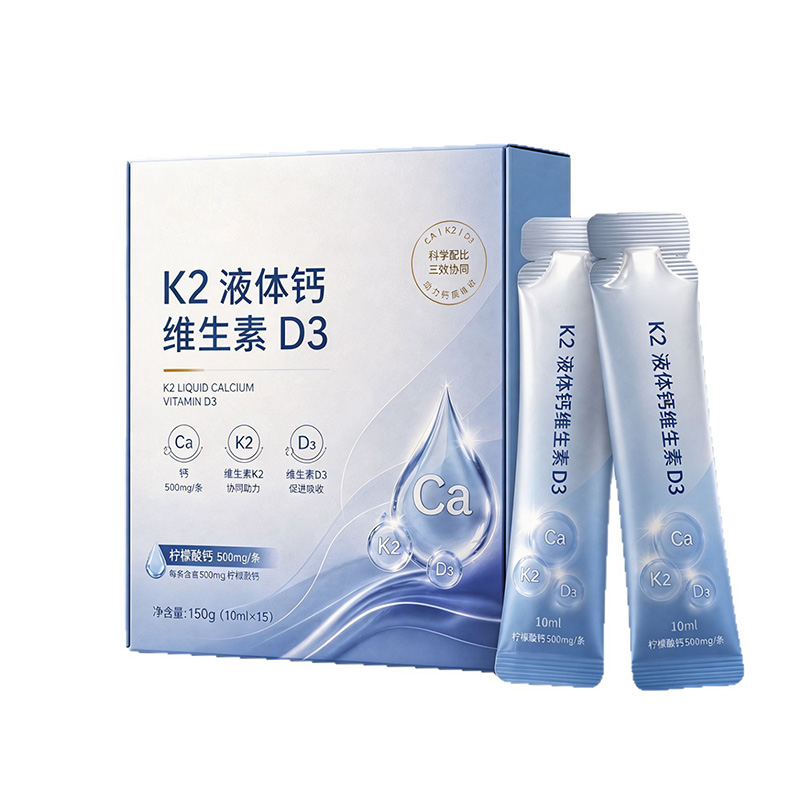
Glass is chemically inert, interacts hardly at all with the contents, offers excellent barrier properties and is transparent enough to inspect clarity, which is why it remains the traditional default for oral liquids. Its weaknesses are weight, transport cost, breakage and limited thermal shock resistance, since hot filling or sudden temperature changes in transit can crack bottles. Glass also needs specification by hydrolytic resistance and inner surface treatment, since soda-lime and borosilicate types differ clearly in chemical stability and heat tolerance, and acidic or electrolyte-rich formulations need the more stable material. Plastic bottles, mainly PET, HDPE and PP, are light, shatter-resistant, cost-controlled and easy to shape, but they barrier less well than glass, carry permeability and migration risk, and do not withstand terminal sterilisation, so they are normally paired with aseptic filling or a downstream pasteurisation step. Selection depends on pH, alcohol or oil content, sterilisation method, target shelf life and distribution conditions together.
2. Matching liners and closures
Sealing reliability depends largely on the liner inside the cap. Common options are foamed polyethylene, aluminium foil laminate and induction heat-seal membranes. Foil laminate bonded to the bottle mouth by induction heating gives a complete seal with the best barrier and tamper evidence, and is the most widely used solution. Foamed liners rely on mechanical compression from the cap; they cost less but are sensitive to mouth flatness and application torque, where too little torque leaks and too much crushes the liner or cracks the finish. Selection must consider the formulation, since products containing oil phases or surfactants are more demanding on liner resistance and some materials swell or release substances over long contact. Thread fit between cap and bottle finish also needs verification, with a torque range confirmed in practice and monitored or sampled on the line.

3. Running a migration and compatibility study
A compatibility study answers two questions: will anything from the pack enter the product, and will the formulation be adsorbed or react. The programme normally has three parts. Extraction studies treat the packaging with simulating solvents under exaggerated conditions to identify what could migrate and at what level, serving as a risk screen. Interaction studies place the product in the intended pack under defined temperature and humidity and test assay, related substances, pH, clarity, colour and microbiology at several time points covering at least the beginning, middle and end of shelf life, usually under conditions somewhat more demanding than routine stability. Adsorption studies look specifically for loss of the active, which matters for lipophilic or high molecular weight compounds that bind readily to plastic surfaces. Work should start early in the project because of the elapsed time required; beginning it just before commercialisation leaves no room to change course if results are poor.
4. Routes that are easily overlooked
Several paths beyond the container itself are routinely missed. Droppers and measuring cups are in contact with the product as well, so their material and cleanliness belong in the assessment. Printing inks and label adhesives sit on the outside, but small molecules can migrate through the wall, particularly with plastic, so label stock is not entirely free of consequence. Cleaning and residues matter for glass: returnable or washed bottles that are not rinsed thoroughly carry detergent or ionic contamination, so the washing process and final rinse water quality need monitoring. And sterilisation changes behaviour, since heat accelerates interaction, which means compatibility must be assessed on product that has actually been through the intended sterilisation process rather than on untreated samples. Including these routes is what makes the study practically useful.
5. Testing seal integrity
Seal failure is the most common source of quality incidents for oral liquids, showing up as leakage, swollen bottles, mould or falling assay. Test methods divide into destructive and non-destructive. Destructive methods include dye ingress, where samples are immersed in a dye solution under pressure differential and examined for penetration, and microbial challenge, where samples are immersed in a suspension and checked for ingress. These are sensitive but consume the sample and suit validation work. Non-destructive methods include vacuum decay, pressure decay and visual leak detection, usable online or on samples, with vacuum decay widely applied for detecting small leaks without opening the pack. Whichever is chosen, sensitivity must first be established with positive controls of known leak size, defining the smallest detectable aperture, before sampling rates and acceptance criteria are set. It is worth remembering that seal performance is tightly coupled to process parameters, since cap torque and induction sealer power and speed all drift during production, so process monitoring should carry the main load with finished product sampling as backup.
6. Transport validation and storage conditions
Packaging choices are finally tested by logistics. Oral liquids are heavy, fragile and temperature-sensitive, so transport validation should cover drop, compression, vibration and temperature cycling, with appearance, seal integrity and product quality rechecked afterwards. Long-distance and particularly cross-border distribution introduces day-night temperature swings, and if headspace is too small the internal pressure rises with temperature and can cause leakage, so headspace design needs confirming during validation. For storage, glass products should not be stacked under excessive load, while plastic products need attention to deformation and accelerated permeation in hot conditions. Late shelf-life behaviour deserves attention as well, since some compatibility issues are invisible in early testing and only appear after months, which is why stability programmes have to cover the full claimed shelf life rather than the first few months.
Related Products
Calcium + Zinc Oral Liquid Blueberry Flavor | Zinc Gluconate Liquid Calcium Supplement for Kids OEM | Kids Liquid Calcium with High-Potency Vitamin K2 & D3 | Calcium Zinc Oral Liquid for Teens OEM
About Guangzhou Mesen Health Biotechnology Co., Ltd
Guangzhou Mesen Health Biotechnology Co., Ltd is located in the Huashan Science and Technology Park, Huadu District, Guangzhou. The company has focused on OEM and ODM services for the big health industry for nearly 20 years, operating dedicated research, production, sales and management centres, and maintaining long-term strategic partnerships with well-known Chinese medicine colleges and research institutions. Capabilities span pressed candy, gummies, capsules, solid beverages, herbal teas, plant beverages, protein powders, dietary supplements and enzyme jelly - from formulation development through contract manufacturing. For details on minimum order quantities, sampling lead times and quotations, see our manufacturing advantages and product range, or contact us for a tailored proposal.
Further Reading