Herbal Tea OEM Bag Packing Machines: Selection, Setup and Tuning
In herbal tea contract manufacturing, clients discuss raw material price movements at length while packaging losses go largely unexamined. Tea bags are a small-format, high-count product: twenty bags to a box, hundreds of thousands of bags per run. A dosing deviation of a fraction of a gram, a one point rise in the seal failure rate, or two extra hours of changeover cleaning all accumulate into a bigger effect on margin than a raw material price rise. Machine selection and parameter tuning are therefore commercial questions rather than a technician's private business. This article works through five areas - format, dosing, sealing, changeover and acceptance - all of them daily realities on a tea bag line.
1. Settle the bag format before choosing the machine
Three formats dominate. The flat single-chamber bag is the simplest: straightforward mechanics, high speed, cheap consumables, well suited to finer particle sizes and value-driven products. The pyramid bag is used with whole leaf or coarser material and gives the leaf room to expand, which improves both appearance and brewing, but it demands tighter film and forming precision and consumes noticeably more expensive material. The tagged and stringed bag adds thread and a tag to the flat format as an experience upgrade, introducing threading, tag application and needle handling, which means more failure points and a stability that depends almost entirely on how well the threading mechanism is designed. Machine prices, throughput and consumable costs differ substantially across the three, so a single sentence from a client about bag style can change the whole line investment. Format has to be fixed before quotation, not after the packaging artwork is printed.
2. The dosing method sets accuracy, and accuracy sets cost
Three dosing methods are common. Volumetric dosing dispenses by volume through a measuring cup: fast and simple, but highly sensitive to changes in bulk density and flow, so a shift in particle size or moisture moves the fill weight across the board. It is the most widely used method on tea bag lines, provided the material state is stable and the cups are calibrated regularly. Auger dosing controls the fill by screw speed and holds accuracy better with free-flowing fine material, though bridging inside the auger is a recurring problem. Gravimetric dosing is the most accurate and can correct bag by bag, suiting low fill weights and expensive ingredients, at the cost of speed and capital. In practice, the tighter the weight tolerance and the more valuable the material, the further a factory should move toward weighing, trading machine cost for material loss and complaint risk.

3. Filter material and sealing parameters are where quality actually lands
Leaking bags are the single most common complaint in this category and are almost entirely governed by parameters. Three must be tuned together: sealing temperature, pressure and dwell time. Too cool and the seal is weak and bursts in the cup; too hot and the film is burned through or the contents scorch, which matters especially in formulas containing sugars or floral ingredients. Insufficient pressure leaves a partly bonded seam, while excessive pressure thins the seam and paradoxically reduces strength. The filter material itself has to match the setting: nonwoven fabric and laminated filter paper have different heat tolerance, and degradable materials such as corn fibre usually have a narrower sealing window, so parameters must be re-established after a material change rather than inherited from the previous run. Inline monitoring and alarms for sealing temperature and pressure are worth the modest cost, and the seal failure rate belongs in daily records rather than being reconstructed after a complaint.
4. Throughput, losses and changeover cleaning
Rated throughput assumes ideal material and continuous running, so real output is lower, particularly with pyramid and tagged formats. Capacity should be assessed on stable running speed rather than peak instantaneous speed. Losses come mainly from start-up adjustment, film breaks and stoppages, rejected bags and residual material; during normal running this should stay within a sensible band, and anything beyond it points to a machine or parameter problem. Changeover between flavours is a further cost. Filter material, hoppers, augers and conveying paths all need cleaning, otherwise the aroma of the previous product carries into the next, which is especially damaging with strong ingredients such as mint or dried citrus peel. Cleaning time and method belong in a written standard procedure with residue verification.
5. What to record when accepting a machine
Acceptance is not about whether the machine runs. The data worth capturing includes average speed over a sustained run, measured fill weight and its standard deviation, seal failure rate, number of film-break stoppages, loss rate, cleaning time, and the time needed to change format parts. This becomes the baseline for later improvement and the evidence base for conversations with the supplier. A finished-bag seal test is also essential, using a brewing or immersion test to check seam strength, and sampling should deliberately include bags from the start-up phase and from immediately after any restart, since those two windows are where problems concentrate.
6. Parameters do not stay correct forever
Many factories learn this the hard way: settings are written into the work instruction after commissioning and never revisited, and a seasonal change, a new filter material lot or a new flavoured formula then produces a wave of seal failures. The safer approach is to record sealing parameters alongside ambient temperature and humidity, filter material lot and material moisture, adjust them as those inputs move, and confirm the first bag produced at the start of every run. On the maintenance side, uneven heating across the sealing die, worn sealing jaws and drivetrain wear all degrade sealing over time; scheduled inspection and replacement of wear parts is far cheaper than sorting out defective bags afterwards.
Packing looks like an equipment topic in herbal tea, but it is really a cost and quality control topic. Fix the format first, manage dosing and sealing parameters daily, and the margin on small-format products holds up.
Related Products
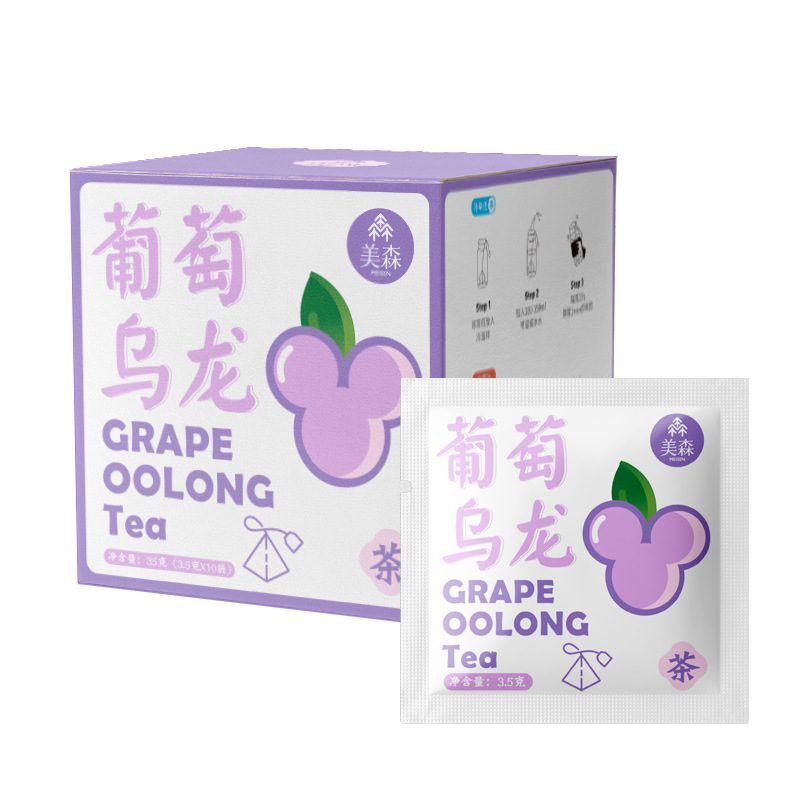
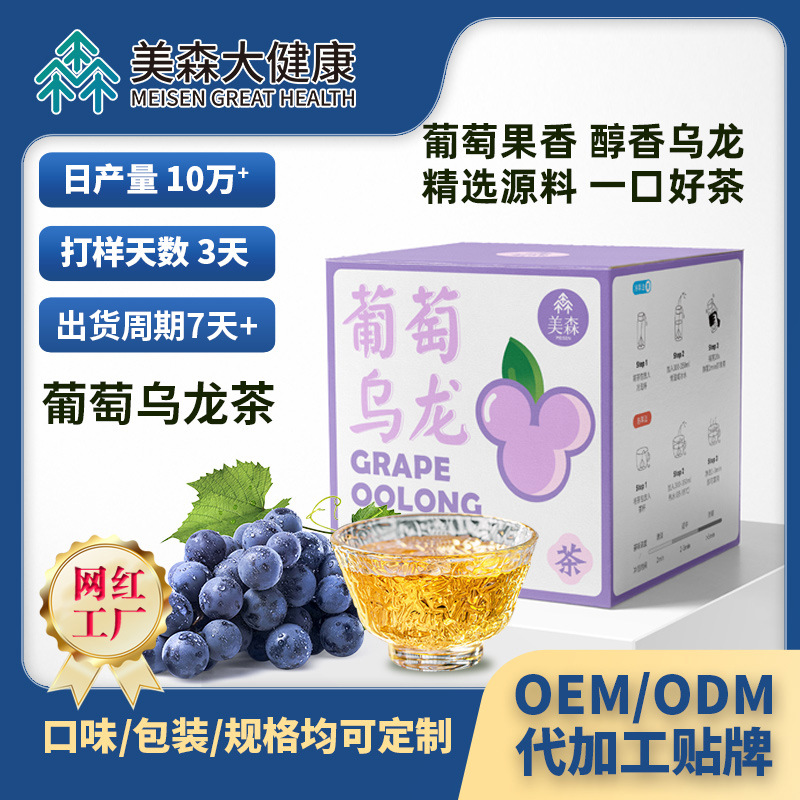
Grape Oolong Fruit Tea Blend | Pyramid Tea Bags Herbal Wellness Tea Custom OEM | Corn Silk Herbal Tea | Wellness Herbal Tea Private Label OEM Manufacturer
About Guangzhou Mesen Health Biotechnology Co., Ltd
Guangzhou Mesen Health Biotechnology Co., Ltd is located in the Huashan Science and Technology Park, Huadu District, Guangzhou. The company has focused on OEM and ODM services for the big health industry for nearly 20 years, operating dedicated research, production, sales and management centres, and maintaining long-term strategic partnerships with well-known Chinese medicine colleges and research institutions. Capabilities span pressed candy, gummies, capsules, solid beverages, herbal teas, plant beverages, protein powders, dietary supplements and enzyme jelly - from formulation development through contract manufacturing. For details on minimum order quantities, sampling lead times and quotations, see our manufacturing advantages and product range, or contact us for a tailored proposal.
Further Reading