Static Control in Capsule OEM: Humidity, Dust Extraction and Fill Stability
On a capsule contract manufacturing line, static is a variable that never appears in the formula yet influences fill weight every shift. Powder picks up charge through milling, sieving, pneumatic transfer and filling. When the air is dry, the powder is fine and the material is a good insulator, that charge has nowhere to go. Powder clings to hopper walls, to the dosing disc, and to the outside of capsule shells, and fill weights start to drift. The awkward part is timing: static problems are invisible in humid summer months and appear suddenly in dry seasons, so the buyer sees one formula on one machine producing fill weights that no longer match. This article breaks workshop control into three lines.
Humidity is the first lever
Relative humidity affects powder charging directly. Water molecules adsorb onto particle surfaces and raise surface conductivity, letting charge dissipate faster. As a rule of thumb, moving relative humidity from 30 to 50 percent resolves static problems for most powders. Higher is not automatically better. Capsule shells are made of gelatin or hydroxypropyl methylcellulose, both hygroscopic: excess humidity makes shells soft, tacky and harder to run, and makes powder cake. The workshop therefore needs a humidity band, not a ceiling. Set that band from both powder and shell behaviour, usually through product-specific trials: hold temperature constant, step humidity up in stages, and watch fill weight variation, wall adhesion and shell running rate together until all three are acceptable.
Temperature and humidity move together
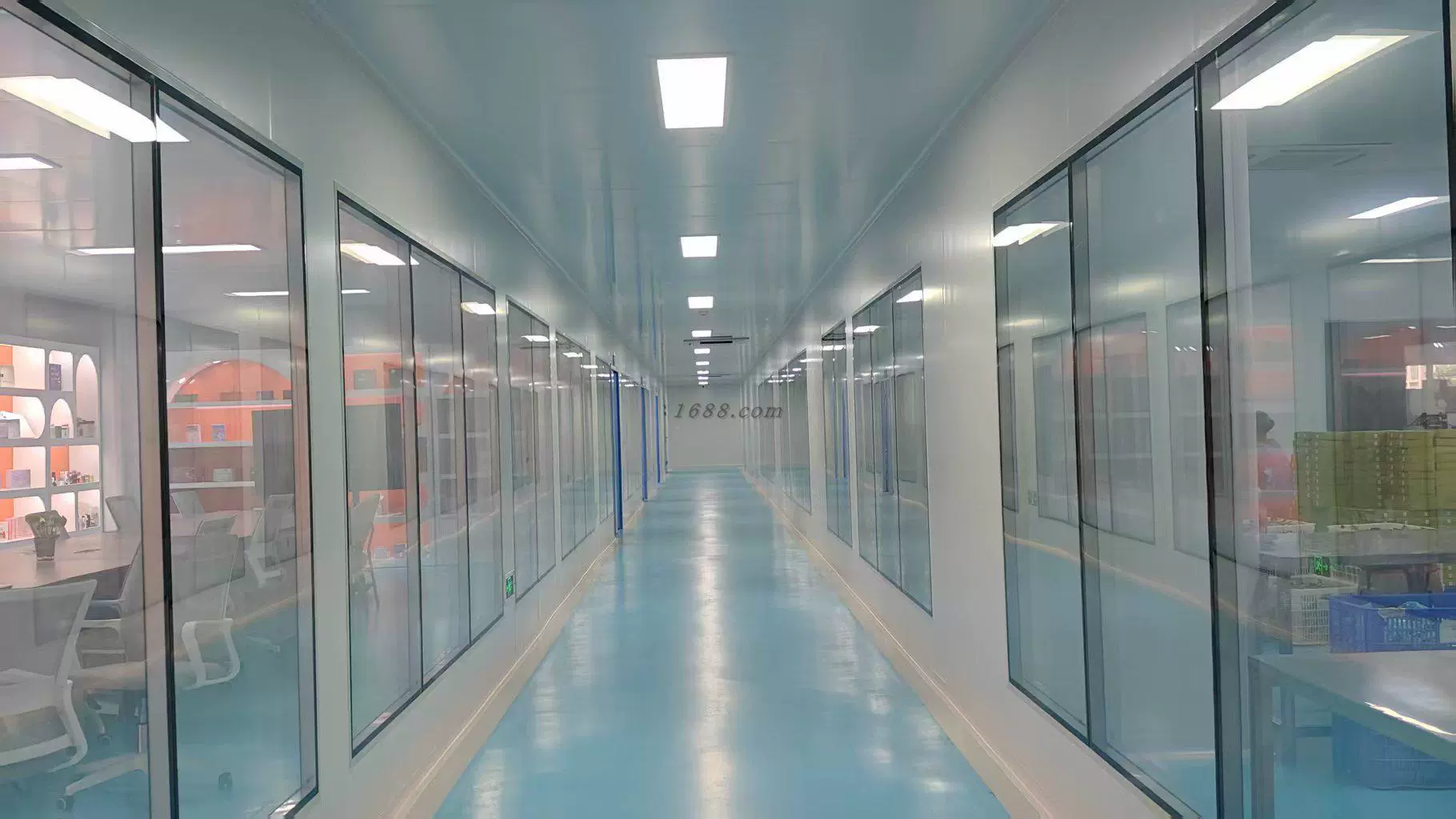
The two cannot be managed separately. At the same relative humidity, a higher temperature means more absolute moisture in the air and a greater risk of powder picking it up; a lower temperature pushes relative humidity toward saturation and risks condensation. Room control should therefore track absolute humidity or dew point as a secondary indicator rather than trusting the wall hygrometer alone. Air distribution matters too. Supply air blowing straight onto a filling station accelerates evaporation and static build-up; poor return design lets machine heat create a locally dry zone beside the equipment. A practical layout puts supply diffusers over personnel walkways, keeps low-velocity laminar flow over the machines, and places an independent temperature and humidity sensor near each filler.
Grounding, ionisation and materials
Where humidity alone cannot solve the problem, active measures take over. Grounding is the foundation: hoppers, dosing discs, powder transfer lines and machine frames all need reliable static grounding, and grounding resistance should be measured and logged, because oxidised joints, painted surfaces and loose earth leads quietly defeat it. Ionisation is the second line: install ionising blowers or bars at stations where fill weight swings or powder is very fine, positioned after the dust generation point and before the filling point, so positive and negative ions neutralise surface charge. Materials and surface finish are the third: avoid unnecessary insulating coatings on hopper and chute interiors, and where needed select lower-surface-resistance materials or conductive coatings. Sequence these as grounding first, ionisation second, materials last, because grounding delivers the most for the least.
Dust extraction and pressure differentials
Fine powder suspended in a room is a hazard in its own right. Combustible dust at sufficient concentration with an ignition source can deflagrate, and static sparks are a common ignition source. Dust extraction is not optional. Design points include local extraction hoods at milling, sieving and filling points to stop dust spreading; duct velocities high enough to prevent settling; antistatic filter media and well-grounded ducting; and dust collectors specified for combustible dust with a regular cleaning schedule. Room pressure differentials matter as well. Capsule filling areas are typically held at slight positive pressure to protect the product, while dust-generating zones are better at slight negative pressure to contain powder. The final direction depends on the airflow design of the whole clean area and cannot be decided station by station.

Routine checks and records
The common failure in environmental control is equipment installed but unused, and data collected but never read. Keep a daily checklist: temperature, relative humidity and dew point at every monitoring point each shift; grounding tightness and resistance weekly; ioniser output and electrode cleanliness monthly; extraction filter differential pressure and replacement intervals quarterly; and link the shift environmental data into each batch record. Then, when fill weight drifts, you can check whether the environment was abnormal instead of blaming the formula. The records pay off twice: over time they reveal the humidity window each product prefers, turning experience into a reusable process parameter.
Investigation order when something changes
When fill weight variation widens suddenly, work a fixed sequence rather than adjusting the machine by feel. Environment first: is humidity below the historical band, is grounding intact, are ionisers running. Powder second: has particle size distribution, moisture or supplier lot changed, is there caking or reduced flow. Equipment third: dosing disc and scraper clearance, powder adhering to hopper walls, any change in filling speed. Shells fourth: a new lot, storage conditions, running rate. Only then touch parameters. Following the order prevents an environmental problem being misdiagnosed as a machine problem, which typically ends with the process window narrowed a little further each time.
Static is the easiest environmental variable to overlook on a capsule line, and it directly affects fill weight, running rate and safety. Use a humidity band as the base, correct with temperature and dew point, add grounding and ionisation, hold the safety line with extraction and pressure control, and let a checklist turn the data into something reusable. Control the environment and stable fill weights follow.
Related Products
Vitamin D3 K2 with Magnesium & Zinc Softgels | VITAMIN D3+K2 MAGNESIUM+ZINC Softgels OEM | Calcium + Magnesium + Zinc + Vitamin D3 Softgels | CALCIUM+MAGNESIUM+ZINC D3 Softgel OEM
About Guangzhou Mesen Health Biotechnology Co., Ltd
Guangzhou Mesen Health Biotechnology Co., Ltd is located in the Huashan Science and Technology Park, Huadu District, Guangzhou. The company has focused on OEM and ODM services for the big health industry for nearly 20 years, operating dedicated research, production, sales and management centres, and maintaining long-term strategic partnerships with well-known Chinese medicine colleges and research institutions. Capabilities span pressed candy, gummies, capsules, solid beverages, herbal teas, plant beverages, protein powders, dietary supplements and enzyme jelly - from formulation development through contract manufacturing. For details on minimum order quantities, sampling lead times and quotations, see our manufacturing advantages and product range, or contact us for a tailored proposal.
Further Reading