Blending in Herbal Tea OEM: Ingredient Pairing, Flavour Balance and Repeatability
Herbal tea is one of the most formula-sensitive categories in herbal tea contract manufacturing. The dried ingredients are the entire source of flavour - there is no top note to add back and no extract to dose in. What a drinker remembers depends completely on the ratio between a handful of dried botanicals. In a thirty-gram pack, two extra grams of chrysanthemum or one gram less of liquorice changes the cup entirely. Blending is therefore not simple addition but a structured method. This article separates it into three layers: building the skeleton, balancing flavour, and reproducing the blend across batches.
Three layers: base, support and modifier
A cup is usually built from three roles. The base decides what the drink is and takes the largest share, typically spanning two or three ingredients - chrysanthemum for a cooling, clean profile, dried tangerine peel for a fruity one, roasted barley for a cereal one. The support layer spreads the base character out, adding taste and physical roundness: goji for sweetness, hawthorn for acidity, barley for body. The modifier is the third layer, dosed in small amounts but determining the finish and the identity of the blend - a little liquorice for returning sweetness, a little osmanthus for a tail aroma, a little mint for a cooling lift. Structuring a formula this way moves the discussion from which ingredients to what each layer is responsible for, which makes review meetings far more productive.
How to set ratios
Two routes work well. The first is progressive layering from the main taste: fix the base and its dose, brew the reference cup, then add support and modifier one at a time with a comparison at each step, so it is always clear what caused a change. The second is a dose ladder: run three levels of a key ingredient against a blank that omits it, and find the optimum band through blind tasting. Both insist on single-factor work before combinations; skipping that step usually means repeating many rounds later. One practical detail is easily missed: herbal tea flavour comes from infusion, and brew time and water temperature change how much each ingredient contributes. Tasting must therefore fix temperature, volume and time, or the data cannot be compared.
How imbalance presents
Imbalance shows up in four ways. Sharpness - acidity or bitterness hitting hard at the first sip with insufficient sweetness or body to cushion it - usually means the base is overdosed or the support layer is too thin. Flatness, where aroma never lifts and the taste is dull, often points to a missing modifier, or to over-dried or long-stored ingredients that have lost volatiles. Disconnection, where the opening and the finish read as two separate drinks, usually means the base and support lack a bridging ingredient. A bitter or astringent tail, with an unclean aftertaste, typically comes from over-dosing tannin- or saponin-bearing botanicals. Each has its own fix: sharpness takes more support, flatness takes a modifier, disconnection takes a bridge, and a harsh tail takes a lower dose plus a small amount of something sweet and mellow to close.
Repeatability is the real challenge
A blend that sings at sampling stage and falls apart in production is the classic herbal tea failure. The cause is that natural materials keep changing: chrysanthemum from one origin differs between early and full bloom, tangerine peel differs markedly between one year and three years of ageing, and even within a liquorice lot the root head and tail carry different sweetness. Four practices help. Build a sensory reference library and compare every incoming lot against it, rejecting anything outside the tolerance. Rewrite the formula from percentages into a structured description of the target flavour, with permitted variation ranges for critical ingredients. Fix origin and harvest window, and put those into the purchasing specification. And run a sensory re-check on every finished batch, keeping a batch file so any drift can be traced back to a specific material.

Handing off from formula to process
Once the blend is fixed, the process still has to reproduce it. Particle size and fines content govern infusion speed - cut too fine and the opening becomes harsh. Filter bag permeability and pore size change the real infusion curve, so they must be confirmed together with the formula, not after it. Blend uniformity determines whether bags in the same box match, so validate the mixing step by sampling multiple points and comparing composition. Moisture control directly affects both aroma retention and mould risk; a finished product running high on moisture will go flat in storage no matter how good the blend is. Bring process and packaging people into the blend review, so a formula is not signed off only to discover the line cannot deliver it.
A review checklist for buyers
Six checks are worth completing before a blend is approved. Sensory: the base is clear, the layers are complete, the finish is clean, with tasting conditions recorded. Repeatability: run the blend on two different incoming lots and confirm flavour deviation is acceptable. Process: particle size, fines and filter bag specification are matched. Stability: re-assess aroma and taste after accelerated storage. Compliance: every ingredient is permitted for herbal tea use, and the product name and ingredient list reflect the contents honestly. Cost: model how movement in the base ingredient price affects total cost, and keep a fallback option. Complete all six before sign-off and later rework drops sharply.
Blending herbal tea is the craft of turning flavour into structure. Separate the three layers first, set ratios through single-factor work before combinations, diagnose imbalance across four patterns, and protect repeatability with a reference library and raw material specifications. Get the formula stable and the product earns the right to be bought again.
Related Products
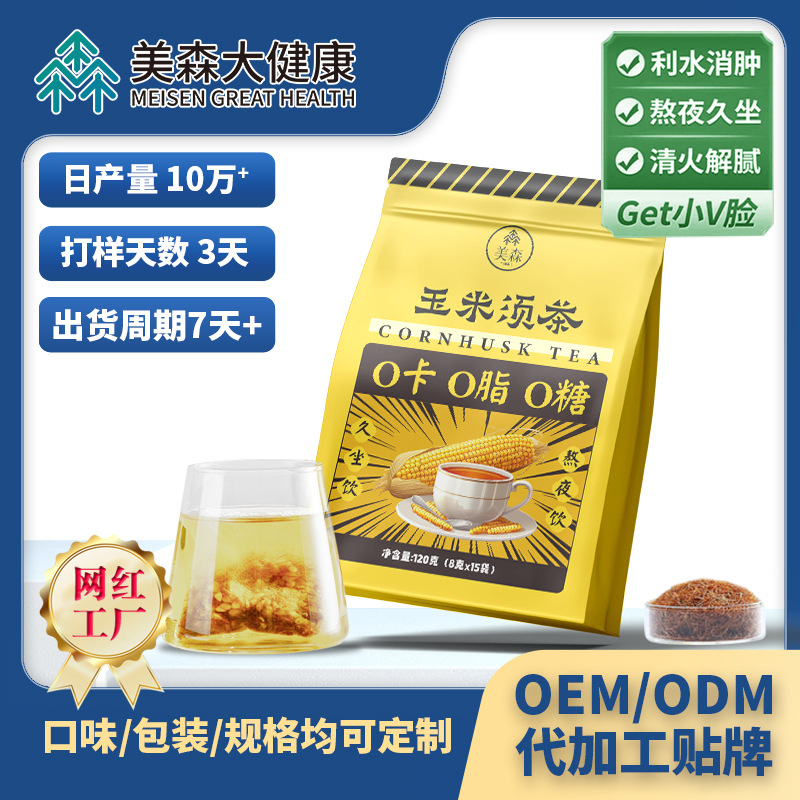
Grape Oolong Fruit Tea Blend | Pyramid Tea Bags Herbal Wellness Tea Custom OEM | Corn Silk Herbal Tea | Wellness Herbal Tea Private Label OEM Manufacturer
About Guangzhou Mesen Health Biotechnology Co., Ltd
Guangzhou Mesen Health Biotechnology Co., Ltd is located in the Huashan Science and Technology Park, Huadu District, Guangzhou. The company has focused on OEM and ODM services for the big health industry for nearly 20 years, operating dedicated research, production, sales and management centres, and maintaining long-term strategic partnerships with well-known Chinese medicine colleges and research institutions. Capabilities span pressed candy, gummies, capsules, solid beverages, herbal teas, plant beverages, protein powders, dietary supplements and enzyme jelly - from formulation development through contract manufacturing. For details on minimum order quantities, sampling lead times and quotations, see our manufacturing advantages and product range, or contact us for a tailored proposal.
Further Reading