Enzyme Jelly Packaging in OEM: Cups, Pouches and Squeeze Sticks Compared
Half of the experience of an enzyme jelly happens in the three seconds it takes to open the pack. A lid film that will not peel, a tear that sprays the user, a squeeze stick that breaks mid-flow, residue at the pouch mouth that stops it resealing - details like these become reviews and returns, and they are usually waved through at the packaging selection stage. In enzyme jelly contract manufacturing, the pack format is a decision that has to be settled alongside the gel formula and the filling process. This article compares the three mainstream formats - cup, stand-up pouch and squeeze stick - covering where each fits, how to validate seals and opening, and the packaging-related complaints that keep appearing.
Cups: the classic format and its controls
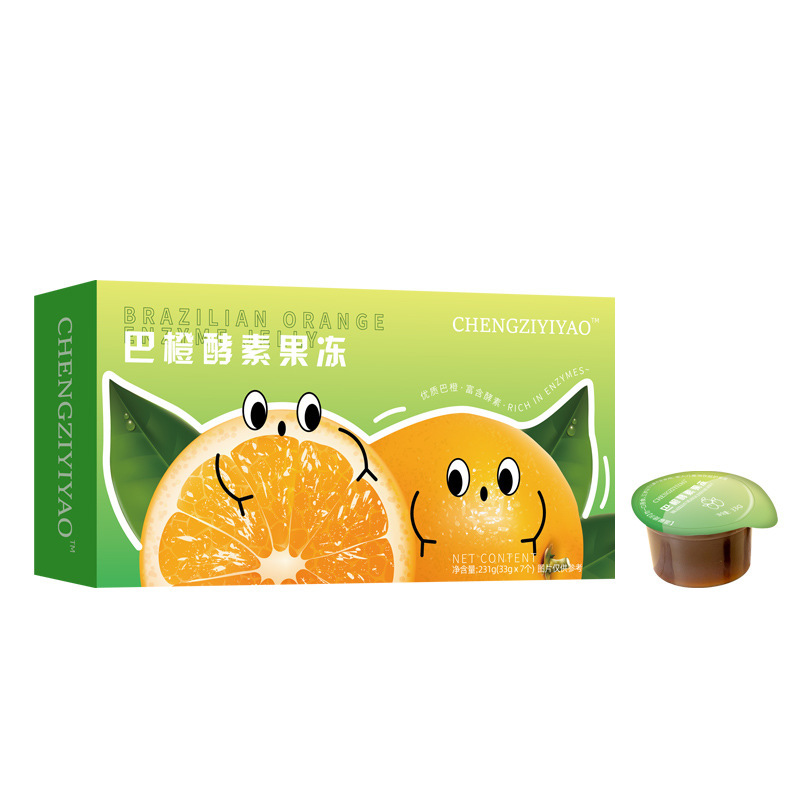
The cup is the traditional jelly format: a body, usually PP or PS, plus a lid film of laminated foil or composite film. It fills fast, costs little per unit, stacks neatly on shelf, seals reliably and suits multi-packs. The critical item is the heat-seal match between film and cup. Seal temperature, pressure and dwell must be validated against the specific film and cup rim. Under-seal and it leaks; over-seal and it will not peel. Three things shape the opening experience. Provide an easy-peel start point, normally a protruding tab at one corner or a pre-cut notch. Keep the peel force inside a target band, which means measuring peel strength rather than judging by hand. And avoid a tear that sprays contents, which the cup rim geometry and the fill level both influence. Complaints cluster around lids that will not peel, edge leakage and cup distortion under load.
Stand-up pouches: capacity and shelf presence
Pouches with a spout, or with a tear notch, suit larger single servings or products meant to be squeezed out over several uses. Capacity is flexible, the printable area is large, transport is efficient, and opening styles vary from a screw-cap spout to a direct tear. The constraints come from flexibility. Pouches distort under compression, so poor palletising can create micro-leaks along the seal edges. The weld between spout and pouch is another critical control point, and a weak weld is a leading source of leakage. Filling demands better accuracy and drip control than cups, because liquid left in the seal zone produces a false seal. On the opening side, define spout feel and cap torque together, and control the tear path so it does not run off-line. Pouches suit moderate-viscosity contents in the tens-of-millilitres single-serve range.

Squeeze sticks: portability against convenience
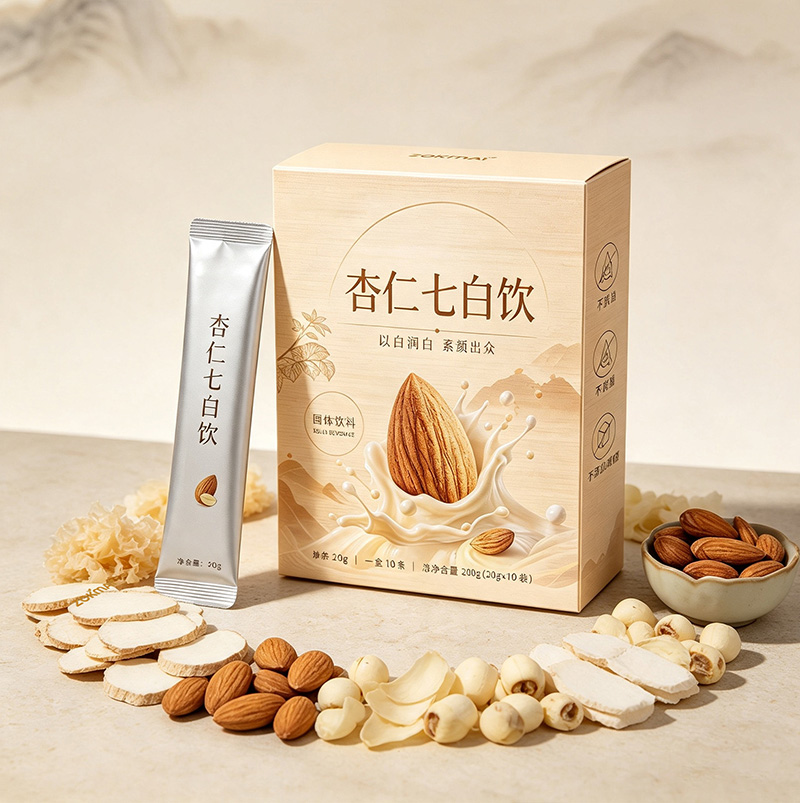
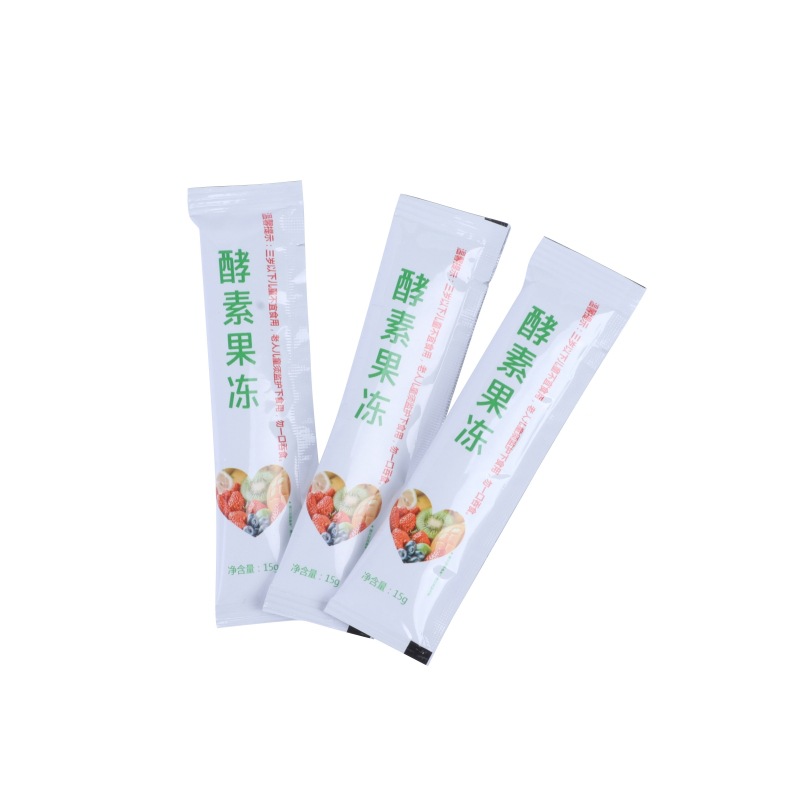
Squeeze sticks are the fastest-growing format. The shape sits well in the hand, travels easily and suits commuting and outdoor use, which makes it a natural fit for small single servings. Three technical points dominate. First, filling and sealing rhythm: the seal zone is narrow, so a single drip from the filling nozzle creates a false or contaminated seal, which makes anti-drip nozzle design a prerequisite. Second, squeeze-ability: content viscosity and stick bore must match. Too viscous or too narrow and the stick will not empty, producing break-up and residue that hit both net content compliance and the user experience. Third, opening: sticks typically use a tear notch or pre-cut line, and its position and depth need measuring during trial production - too shallow and it will not tear, too deep and it splits in transit. Sticks also have a high surface-to-volume ratio, so aroma loss and moisture migration over storage are worse than in cups, and shelf-life validation cannot be simplified.
Validating seals and opening effort
Whatever the format, seals and opening have to be quantified. Seal validation runs in two steps: a visual and tactile screen for a continuous seam free of trapped product and wrinkles, then instrumented testing covering seal strength by tensile test and seal integrity by dye penetration or pressure decay. Opening effort belongs on instruments too - peel strength or cap opening torque - with a specified band written into the internal standard. Sample across production periods and across machine stations, because temperature and pressure variation creates within-batch differences in seal condition. Re-test seal integrity after a transport simulation as well, since vibration and stacking are the main drivers of micro-leaks, and a static pass does not guarantee a post-transit pass. The testing costs little and removes a large share of leakage complaints.
Matching pack to contents
Format selection comes back to the contents. Viscosity decides whether a squeeze format is feasible and how much residue is left behind. Water activity and acidity decide whether the inner layer needs stronger acid and moisture resistance. Dye and flavour migration govern interaction between inner layer and contents, so a pale product in a dark-lined pack needs specific confirmation. Aerated or oxidation-sensitive formulas need the pack's oxygen barrier assessed. Temperature is another variable: in summer heat viscosity drops, which improves squeeze feel but raises leakage risk, while in the cold viscosity rises or the gel state changes, so squeeze performance needs confirming in both chilled and ambient scenarios. Do the trial with the final contents rather than water or a simulant, because viscosity, surface tension and residue behaviour differ more than expected.
Pack changes and batch consistency
Packaging looks simple but changes cascade. Switching film supplier, adjusting film thickness or modifying a cup mould all shift the heat-seal window and the opening force, so seal and opening validation has to be repeated and filed. Typical batch-to-batch issues include film lots whose heat-seal layer was slightly reformulated, giving different seal strength at the same settings; cup moulds wearing until the seal face is no longer flat; and print process changes altering the coefficient of friction on lacquered areas, which affects how smoothly packs convey. Manage this by bringing packaging into supplier change control, requiring advance notice and sample approval for any change, and adding a seal-compatibility spot check to incoming inspection performed on the actual machine at small volume. That prevents a line stop caused by a packaging difference mid-campaign.
Choosing a pack format is really about aligning contents, channel and consumer action. Cups win on cost and uniformity, pouches on capacity and shelf presence, squeeze sticks on portability and immediate use, and the boundaries are clear. Quantify seals and opening with instruments, trial with the real contents, and hold batch consistency through change control - and those three seconds, where jelly products most often go wrong, stay under control.
Related Products
Extra Strength Orange Enzyme Jelly with Prebiotics | Fruit-Flavored Cup Jelly Private Label OEM Manufacturer | Collagen Fruit & Vegetable Enzyme Jelly with Prebiotics | Custom Extra Strength Jelly OEM Factory
About Guangzhou Mesen Health Biotechnology Co., Ltd
Guangzhou Mesen Health Biotechnology Co., Ltd is located in the Huashan Science and Technology Park, Huadu District, Guangzhou. The company has focused on OEM and ODM services for the big health industry for nearly 20 years, operating dedicated research, production, sales and management centres, and maintaining long-term strategic partnerships with well-known Chinese medicine colleges and research institutions. Capabilities span pressed candy, gummies, capsules, solid beverages, herbal teas, plant beverages, protein powders, dietary supplements and enzyme jelly - from formulation development through contract manufacturing. For details on minimum order quantities, sampling lead times and quotations, see our manufacturing advantages and product range, or contact us for a tailored proposal.
Further Reading