Moisture Control in Solid Beverage OEM: Low-Humidity Rooms, Dew Point and Barrier Packaging
Powder drinks are among the most moisture-sensitive products a contract plant can run. Powder has enormous surface area, and thirty or forty minutes of exposure to humid air is enough to turn a free-flowing product into a caked one, bringing poor flow, inaccurate fill weight, lumps that sink when reconstituted, colour darkening and flavour loss. Brands tend to blame the formulation, but most of the time the cause is environmental and packaging related: the same formula passes in the dry season and cakes in the wet season, and if the process parameters did not change, the moisture load did. On solid beverage programmes we treat moisture protection as a system, not a single fix.
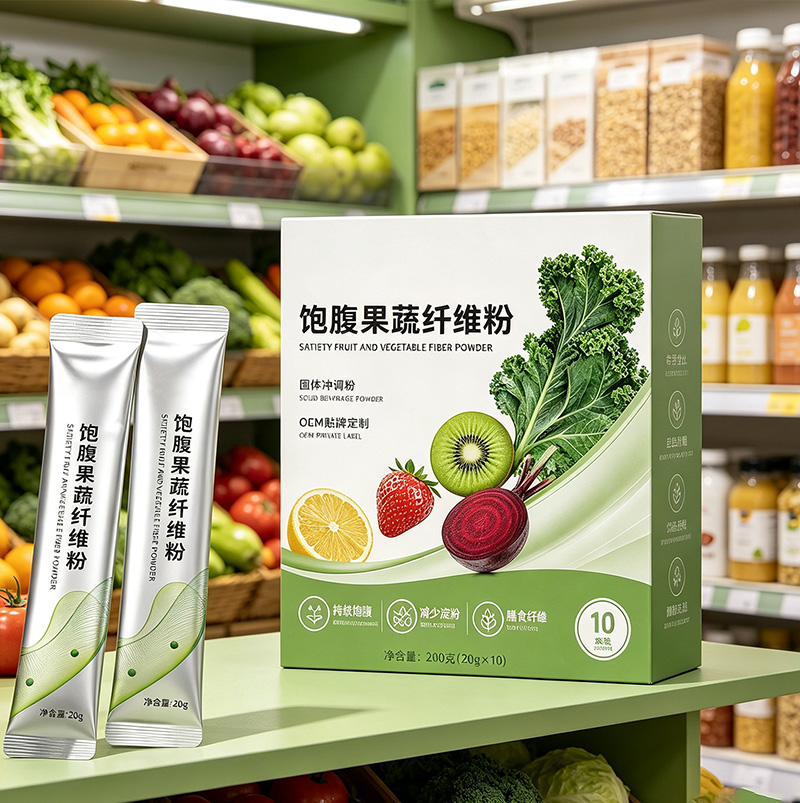
1. How caking actually happens
The mechanism is simple. Moisture adsorbs onto the particle surface, surface components dissolve and form a saturated liquid film, particles in contact bridge through that film, and when conditions dry again the dissolved solids recrystallise and the liquid bridge becomes a solid bridge that locks the particles together. Two conditions are needed: soluble material and water. That is why formulations containing sugar, milk powder or fruit juice powder carry the highest risk. Glass transition is the second piece of the picture. Amorphous components such as spray-dried juice powder and maltodextrin pass from a glassy to a rubbery state above their glass transition temperature, becoming sticky, and absorbed moisture lowers that transition temperature, so more water means more stickiness and faster caking. Once both mechanisms are clear, the control objective is obvious: keep water out, rather than trying to break lumps afterwards.
2. Setting the room conditions
Rooms are usually described by relative humidity, but for hygroscopic powders dew point is the more honest measure, because it reflects the absolute water content of the air. Weighing, blending and filling for powder drinks typically run below 40 per cent relative humidity, and high-risk products are pushed to 30 per cent or below, corresponding to a dew point in the region of zero to five degrees. Two dehumidification technologies are in play: refrigerated systems suit the normal band at lower cost, while desiccant wheels reach much lower dew points and suit high-sugar or high-juice products at higher energy cost. Three design points matter. Fresh air make-up is the largest moisture load in a humid summer and needs pre-treatment. Local control is usually more economical than treating a whole hall, so dry air is often applied at the filler rather than everywhere. And monitoring must be continuous, with loggers at critical points and alarms on excursion, rather than a technician walking round with a hygrometer.

3. Managing exposure time
Even in a good room, powder left open will pick up water. The practical control is a maximum exposure time for each step: between weighing and charging, between blending and filling, and for intermediate storage in hoppers, all defined in procedures and visible in the batch record. Intermediate containers stay lidded, transfers are minimised, and hoppers are best fitted with sealed lids and dry-air breathers. Changeover discipline belongs here too: after wet cleaning the line and room must be fully dried and the environment confirmed back in range before restarting, a step that is often skipped and shows up as elevated moisture in the first batches of every run. Scheduling helps as well, with the most hygroscopic products run when the ambient load is lowest and batch cycles kept short.
4. Choosing packaging by transmission rate
Packaging is the last line of defence, and the selection parameter is water vapour transmission rate: the mass of water passing through a unit area in unit time. In rough order of barrier performance, foil laminates are best, metallised films next, and plain plastic laminates weakest. Initial values are not enough; what matters is a shelf-life calculation. From the transmission rate, the pack surface area, the allowable moisture gain of the contents and the target shelf life, work out how much water enters over the intended life and check it against the limit with a safety factor. Stick packs and sachets are often underestimated here, because their small fill volume comes with a large surface-area-to-content ratio. Heat seal parameters need qualification for seal strength and integrity, verified by vacuum leak testing. Desiccants are a cost-versus-benefit decision with a finite capacity, and tubs add the reclosure question after opening.
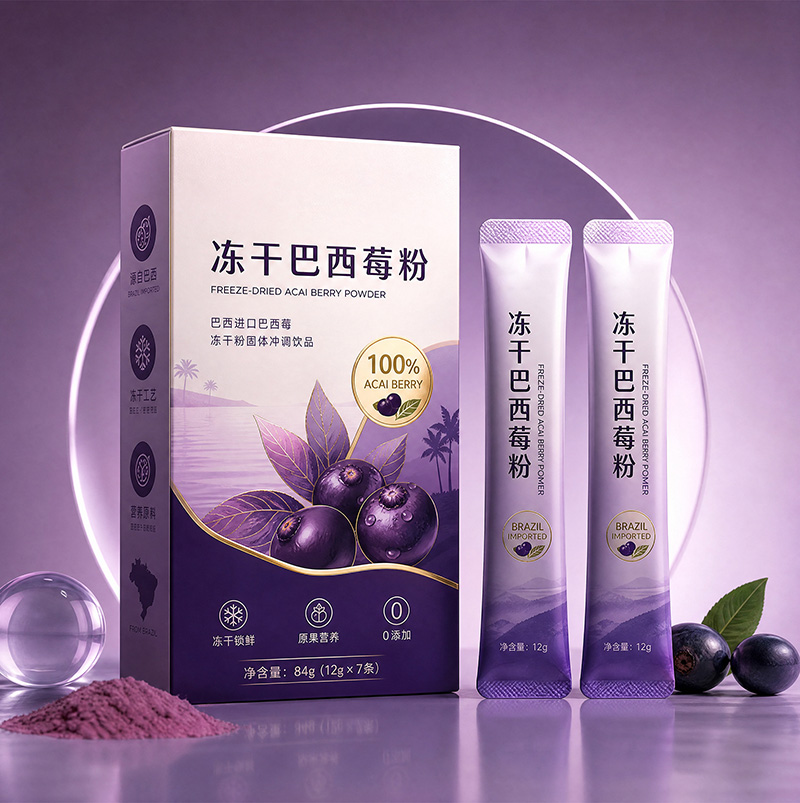
5. Grading the damage
Suspected moisture problems need to be graded. Mild cases show reduced flow and greater fill weight variation, measurable through angle of repose or flow time. Moderate cases show visible lumps, quantified by sieving for caked fraction alongside moisture and water activity. Severe cases bring colour darkening, flavour change and poor reconstitution, which calls the batch into question. True caking has to be distinguished from false caking: compaction produces soft agglomerates that break with light pressure and rarely affect use, whereas crystal bridges form hard lumps that will not disperse and represent a genuine defect. Retained samples are the most useful tool available: reconstitute the retain and the current batch side by side under identical conditions and compare solubility, colour and taste, and any clear difference means something material changed during shelf life.
6. A checklist that actually gets used
Pulling it together, the plant-side list looks like this. Define the maximum permissible moisture for the product and the dew point it implies. Install dehumidification and continuous monitoring at critical steps with alarms and a defined response to excursions. Set and record maximum exposure times per step. Select packaging through a shelf-life moisture calculation and qualify seal integrity. Test moisture and water activity on every batch, adding caked fraction and solubility where the risk warrants. Keep retains and compare them at defined intervals for sensory and physicochemical change. A brand auditing a potential partner can ask these six questions directly; a plant that answers with numbers and records generally does control the risk, and one that answers with the room is very dry usually does not.
Related Products
White Kidney Bean Black Coffee Latte Powder | Instant Keto Enzyme Coffee Solid Beverage OEM Private Label | Protein Berry Meal Replacement Shake Powder | Satiety Smoothie Solid Beverage Custom OEM
About Guangzhou Mesen Health Biotechnology Co., Ltd
Guangzhou Mesen Health Biotechnology Co., Ltd is located in the Huashan Science and Technology Park, Huadu District, Guangzhou. The company has focused on OEM and ODM services for the big health industry for nearly 20 years, operating dedicated research, production, sales and management centres, and maintaining long-term strategic partnerships with well-known Chinese medicine colleges and research institutions. Capabilities span pressed candy, gummies, capsules, solid beverages, herbal teas, plant beverages, protein powders, dietary supplements and enzyme jelly - from formulation development through contract manufacturing. For details on minimum order quantities, sampling lead times and quotations, see our manufacturing advantages and product range, or contact us for a tailored proposal.
Further Reading