Aroma Retention in Herbal Tea OEM: Volatile Loss, Nitrogen Flushing and Flavour Fade Control
Consumers judge a herbal tea largely on what they smell before the first sip, and aroma is the most fragile attribute a product has. It comes from volatile compounds present at a few tenths of a per cent or a few per cent at most, and heat, oxygen and light all remove them irreversibly: once lost, aroma cannot be put back. The awkward part is that many plants manage aroma by tasting and deciding it is about right, with no reference standard and no measurement, so when the market says the product is not as fragrant as it used to be, nobody can say which step changed. On herbal tea programmes we treat aroma as an attribute managed end to end, from raw material through to shelf life.
1. Where aroma comes from and why it disappears
Aroma in herbal tea comes from volatile compounds: terpenes, alcohols, aldehydes, esters and small amounts of sulfur-containing molecules, which together produce the floral, fruity or cooling character of a blend. They share three properties that make them vulnerable: low molecular weight, high vapour pressure and sensitivity to heat, oxygen and light. Terpenes oxidise and polymerise particularly readily into compounds that read as stale or rancid, which is exactly what an improperly stored tea bag smells like. The form in which aroma sits also matters. Some is free and released the moment the pack opens; some is bound as glycosides and only liberated by hot water during brewing. If processing strips the free fraction, the brewed cup loses its top notes and tastes flat even when the bound fraction is intact.
2. Raw material sets the ceiling
The upper limit for aroma is fixed long before processing. Origin and harvest window matter most: the same flower can differ measurably in volatile profile between early and full bloom, and material picked in the morning generally carries higher oil content at a more workable moisture. Drying method is the second variable. Shade drying and low-temperature drying preserve volatiles best but take longer and depend on weather; hot air drying is efficient but causes clear losses once air temperature passes a certain point, particularly in the early stage; freeze drying gives the best retention at a cost that only some products carry. Storage matters as much: volatiles dissipate over time, and large stacks, warm rooms and unsealed packaging accelerate it. The workable control is an aroma baseline, with volatile oil content or a marker compound tested at goods-in and out-of-spec lots rejected.

3. Three loss points in processing
Losses concentrate in three operations. Cutting and milling come first: smaller particle size means more surface area and faster volatilisation, and mechanical friction adds heat, so particle size should be as coarse as the extraction requirement allows and equipment temperature rise must be controlled. Sterilisation is the second and usually the most damaging: steam sterilisation is effective microbiologically but combines heat and moisture, which is the worst case for volatiles; irradiation has comparatively little effect on aroma but brings regulatory applicability and consumer acceptance questions; microwave sterilisation is fast and, with tuned parameters, sits between the two, though heating uniformity needs attention. Blending and conveying are the third: long open mixing and high-velocity pneumatic transfer strip aroma, so cycle times should be short, conveying air speed low and transfer enclosed. There is no universal answer here; the balance depends on how aroma-sensitive the product is against its microbiological risk.
4. Packaging: nitrogen, light and barrier
Packaging is where shelf-life aroma is won or lost. Oxygen is a prerequisite for oxidative deterioration of volatiles, so nitrogen flushing is one of the most effective tools, with residual oxygen held below an agreed level and confirmed by in-line or sampled testing. Vacuum alone performs poorly for tea bags, because paper and plant material outgas and re-absorb. Light protection is routinely underestimated: illumination accelerates degradation of both pigments and aroma compounds, and clear packs that look good on a shelf usually lose the comparison against foil or metallised structures at the end of shelf life. Barrier specification needs both oxygen and water vapour transmission rates, since together they determine how the product behaves over time. Seal integrity must be qualified, because a pinhole leak cancels every benefit the nitrogen flush delivered.
5. Measuring and judging flavour fade
Fade needs both sensory and instrumental evidence. On the sensory side the most practical tool is the triangle test: panellists receive three samples, two identical and one different, and identify the odd one, with the correct-response rate showing whether a difference is statistically significant. It is cheap, quick and well suited to asking whether a shelf-life sample still matches the reference. Descriptive profiling goes further, scoring attributes such as floral, grassy, sweet and stale to show which dimension is fading. Instrumentally, gas chromatography mass spectrometry quantifies marker aroma compounds and provides the most convincing evidence, but the cost suits formulation sign-off and periodic verification rather than routine release. Accelerated testing is a weak predictor for aroma because high temperature sends reactions down different paths, so ambient retains should lead and accelerated data should only support.
6. Consistency and the reference standard
The goal is batch-to-batch stability, not one outstanding batch. The practical route is a reference standard: retain a sufficient quantity from the first commercial run, store it cold, dark and sealed, and use it as the benchmark for later batches, with the same panel comparing at fixed intervals and any result beyond threshold triggering investigation. The standard itself ages and needs periodic replacement with a documented handover. Natural raw material variation has to be accepted rather than fought: agricultural material differs between seasons, and the sensible response is blending across lots to spread the variation rather than trying to force every lot to a single profile. Plants that sustain this discipline produce noticeably more consistent tea than those that rely on a good nose at release.
Related Products
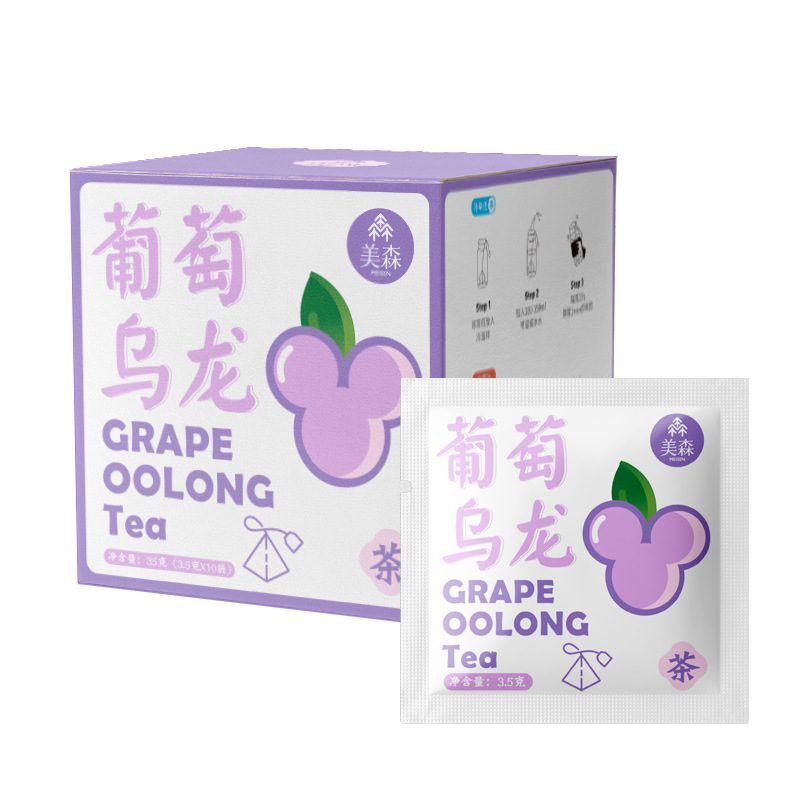
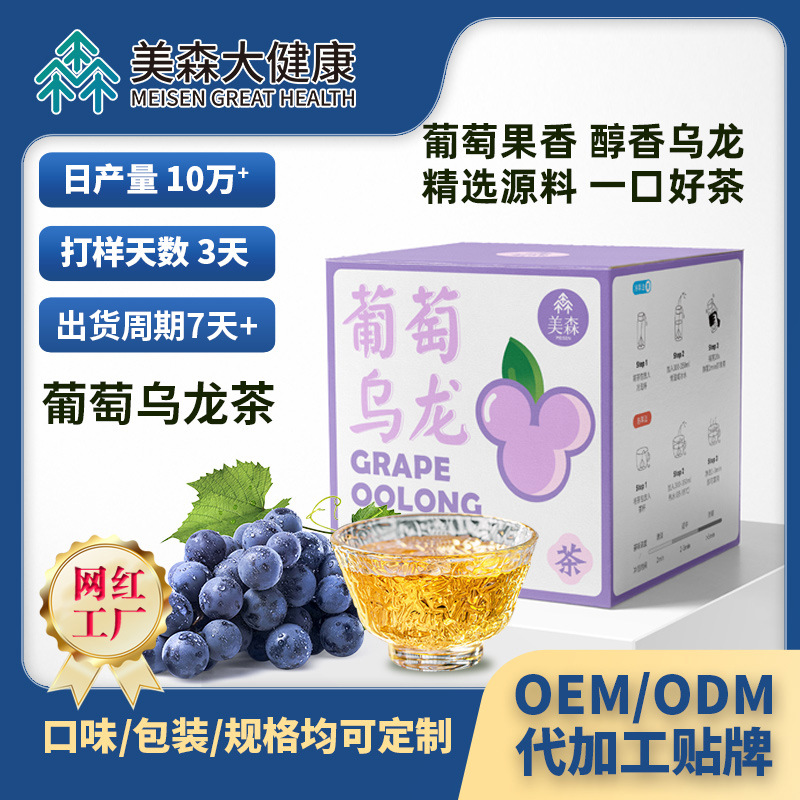
Grape Oolong Fruit Tea Blend | Pyramid Tea Bags Herbal Wellness Tea Custom OEM | Corn Silk Herbal Tea | Wellness Herbal Tea Private Label OEM Manufacturer
About Guangzhou Mesen Health Biotechnology Co., Ltd
Guangzhou Mesen Health Biotechnology Co., Ltd is located in the Huashan Science and Technology Park, Huadu District, Guangzhou. The company has focused on OEM and ODM services for the big health industry for nearly 20 years, operating dedicated research, production, sales and management centres, and maintaining long-term strategic partnerships with well-known Chinese medicine colleges and research institutions. Capabilities span pressed candy, gummies, capsules, solid beverages, herbal teas, plant beverages, protein powders, dietary supplements and enzyme jelly - from formulation development through contract manufacturing. For details on minimum order quantities, sampling lead times and quotations, see our manufacturing advantages and product range, or contact us for a tailored proposal.
Further Reading